
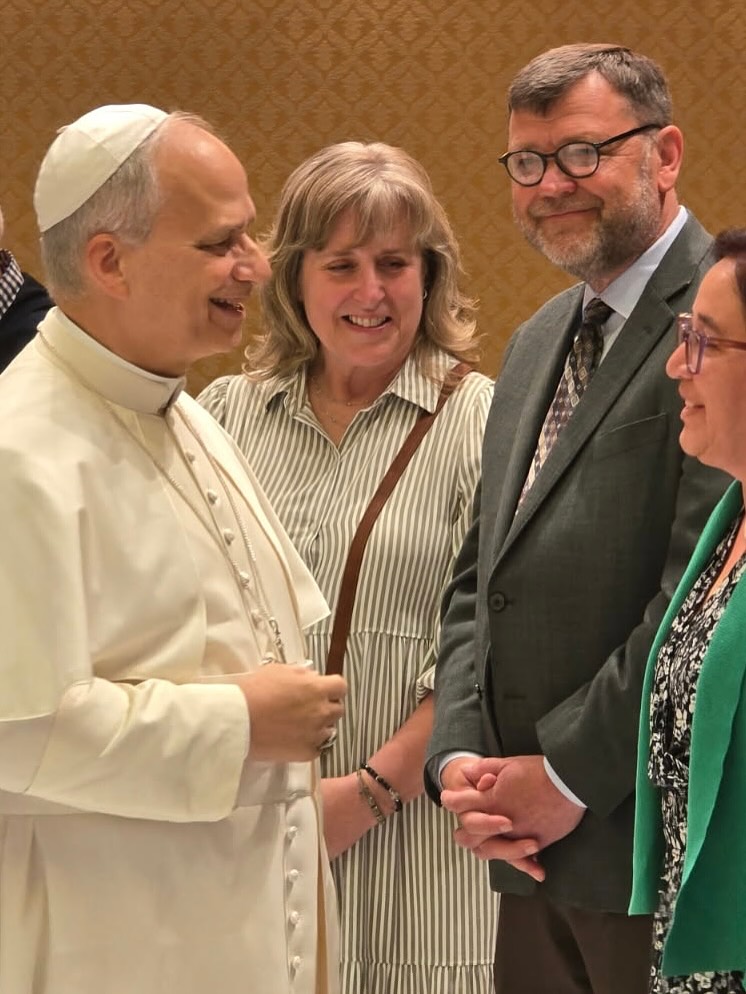
Ever since Margy and I returned from Italy last October, many people have asked us how we came to meet the pope and what that conversation was like. It is not a common experience, and people are understandably curious about how it all came about. Here is the story…
Several years ago, I read a depressing news article reporting on a Pew Research Center study claiming that belief in the Real Presence of Jesus in the Eucharist had declined among Catholics. According to that study, only 31% of Catholics believed in the Real Presence and that 69% believed that the Eucharist was merely symbolic. That was deeply troubling to me, as I have given many teachings on what is often called “The Bread of Life Discourse” in the Gospel of John, Chapter 6. In this discourse, Jesus goes to great pains to emphasize the literal reality of His Real Presence, doubling down on it when people find it too difficult to believe. Read it and see for yourself. Catholics didn’t just make this up.
Being the very source of the Catholic faith, any erosion of belief in His Real Presence strikes at the very heart of the Church. As the famous American novelist Flannery O’Conner once famously quipped, “If it’s only a symbol, then to hell with it!”
The article went on to note that the bishops of the United States were considering a new initiative, proposed by Bishop Andrew Cozzens of Crookston, Minnesota, aimed at rekindling faith and devotion to the Eucharist nationwide. At the time, Bishop Cozzens had just become chair of the United States Conference of Catholic Bishops’ Committee on Evangelization and Catechesis.
Because Jesus in the Eucharist is literally at the center of my life – I’ve been going to daily Mass since January of 1991 – this mattered to me deeply. One evening, just before leaving work, I decided—almost on a whim—to email Bishop Cozzens one of my old blog posts as a word of encouragement. The post tells the story of an extraordinarily audacious stained-glass window I once encountered in a Chicago church that hosted Eucharistic Adoration. Honestly, when I originally published it, I was disappointed at its reception. According to the blog stats, not many people were interested. I still, however, think it is one of the best posts I have ever published. (If you read it, let me know what you think.)
I sent the email to Bishop Cozzens and promptly forgot about it.
About two or three weeks later, I heard from David Spesia, a fellow Notre Dame grad and the Executive Director of the Secretariat for Evangelization and Catechesis at the United States Conference of Catholic Bishops (USCCB). As chair of the secretariat, Bishop Cozzens was technically David’s boss. Bishop Cozzens had forwarded my email to him and suggested that I be invited to help serve on the organizing committee for what would eventually become known as the National Eucharistic Congress.
I accepted without hesitation.
In the early days on this committee, we had to create a new and separate organization. I helped stand it up in some mundane and practical ways. As they worked to secure 501(c)(3) status, I helped them open a bank account and establish a line of credit so they could hire employees and the work could begin. Notre Dame Federal Credit Union provided that initial loan. I advised on some operational issues and facilitated the provision of a lockbox service for their fundraising through Notre Dame FCU. All this turned out to be helpful, but at the time, I had no idea how cool this would all turn out.
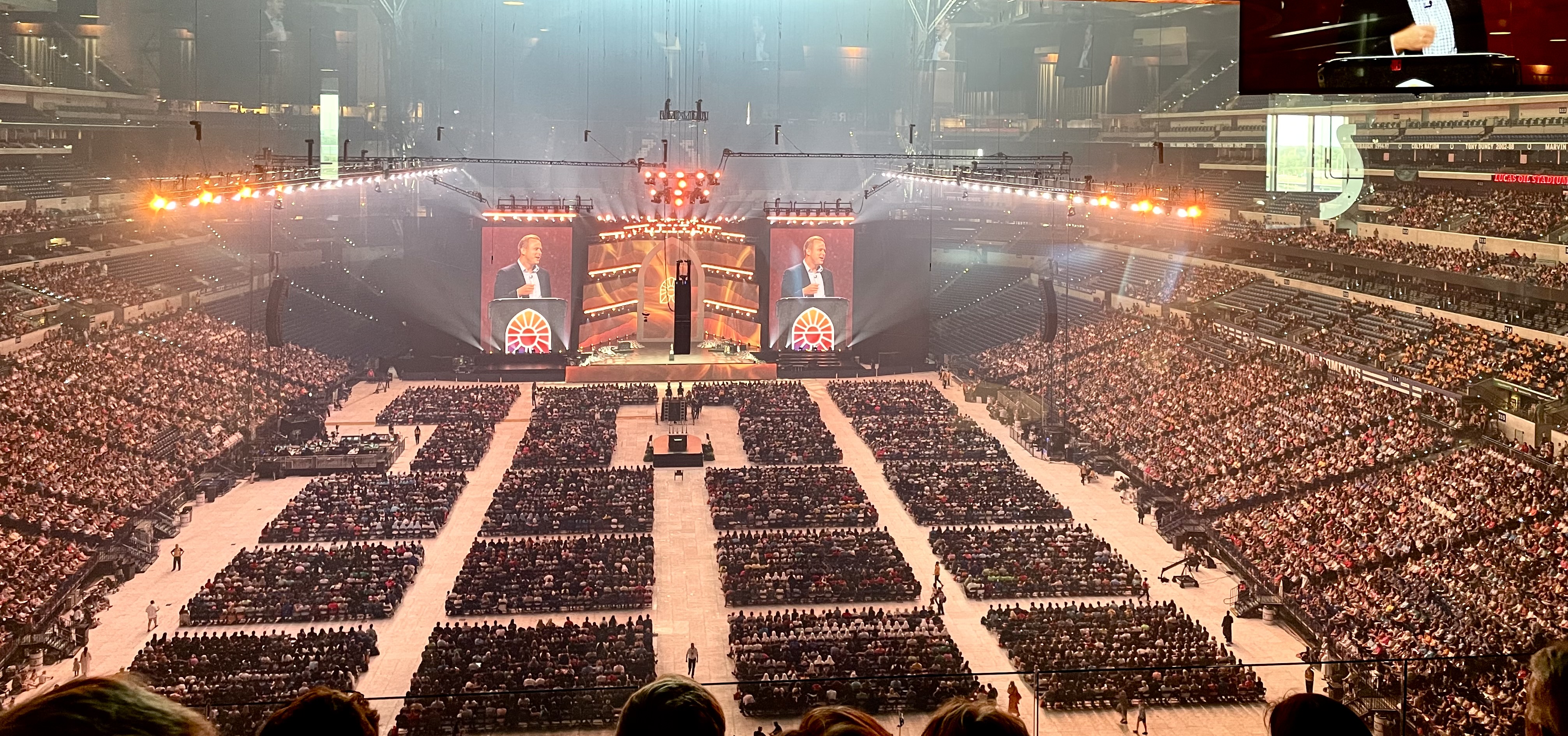
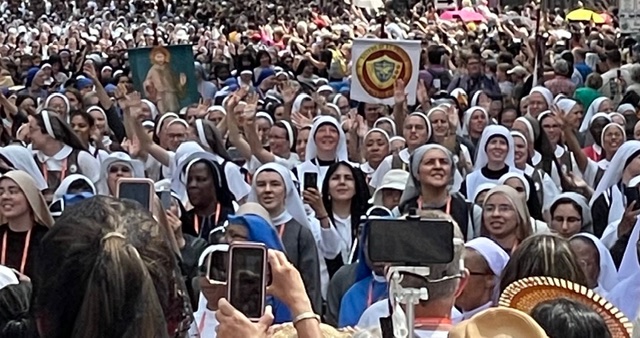
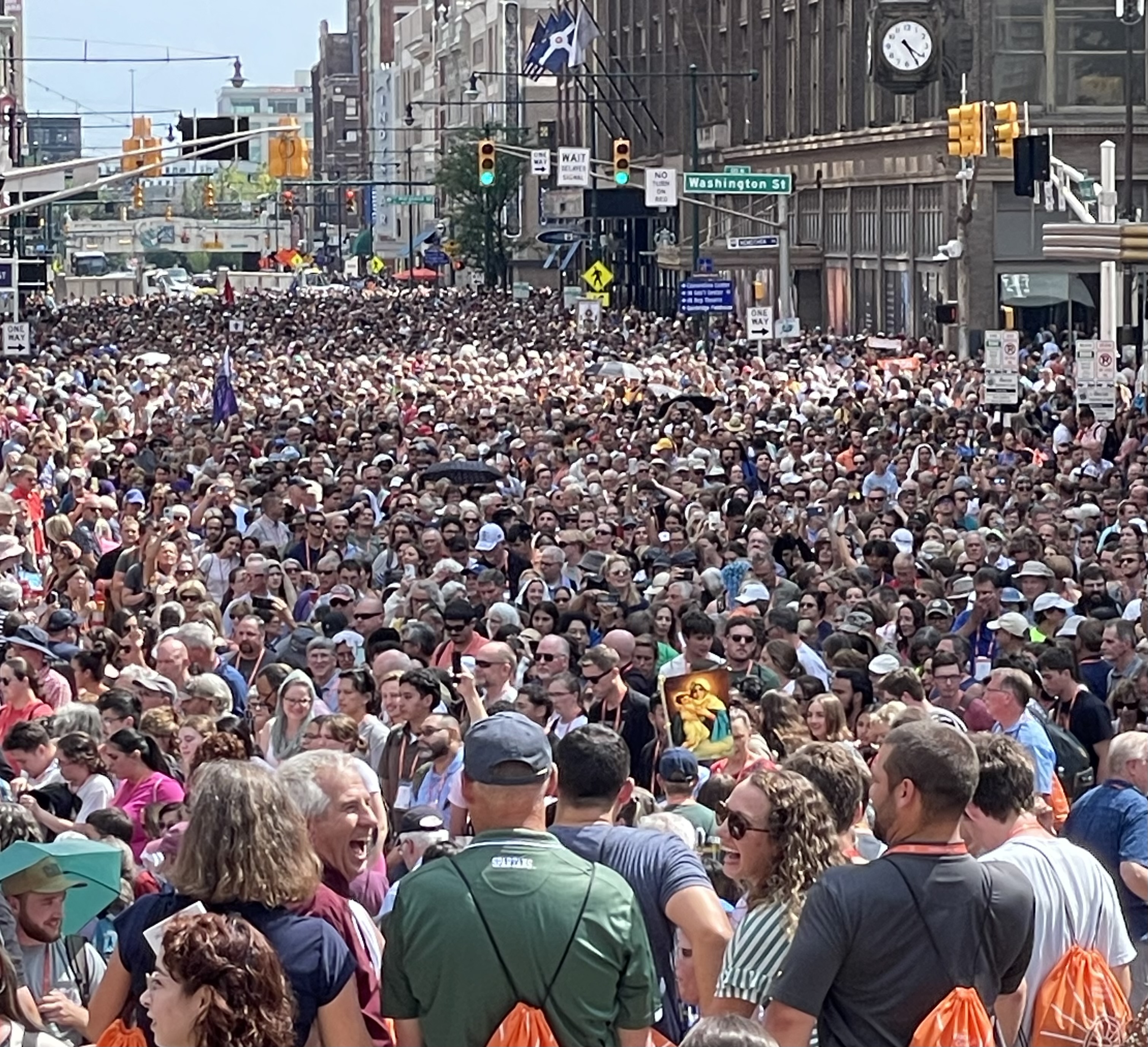
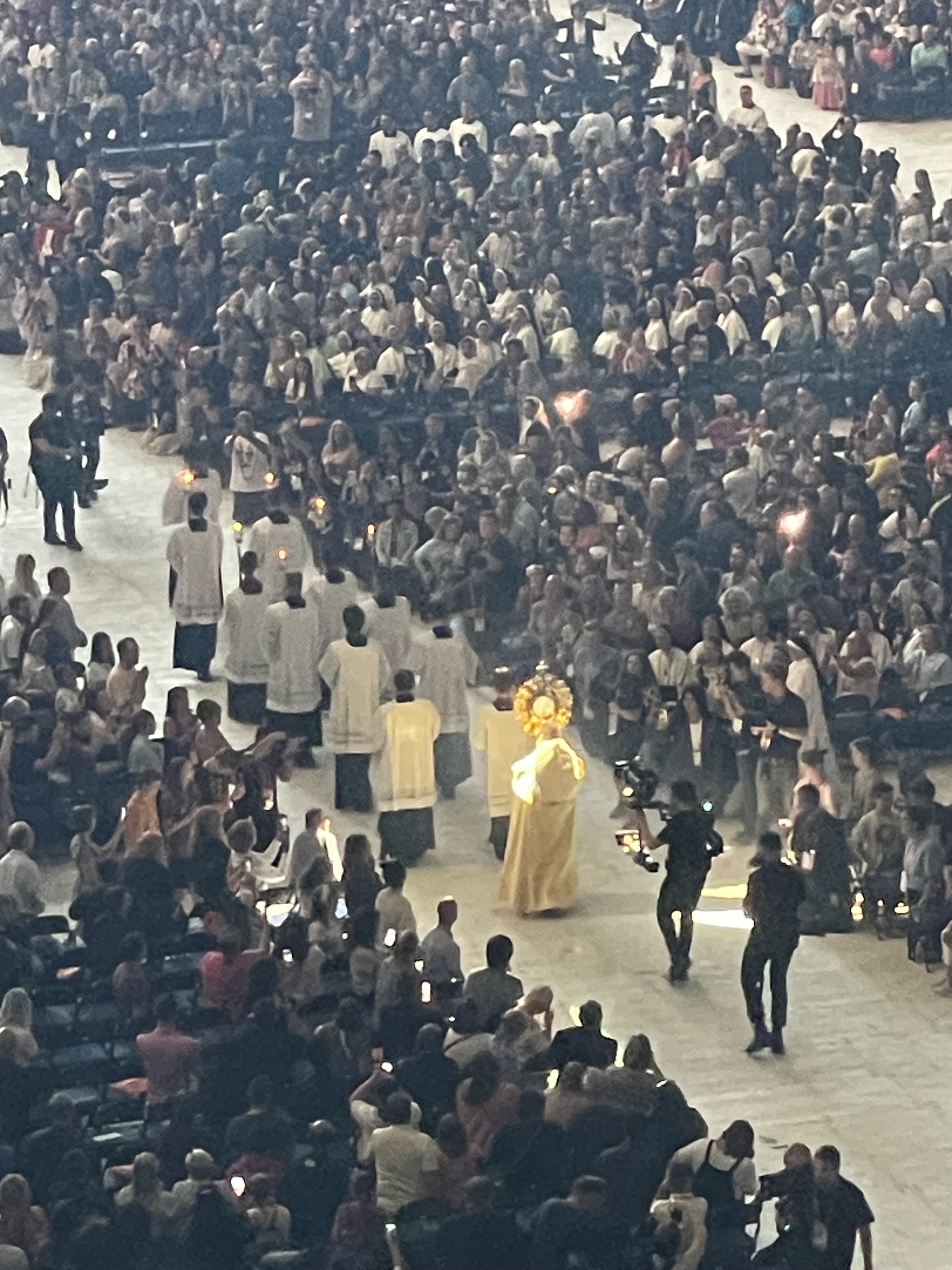
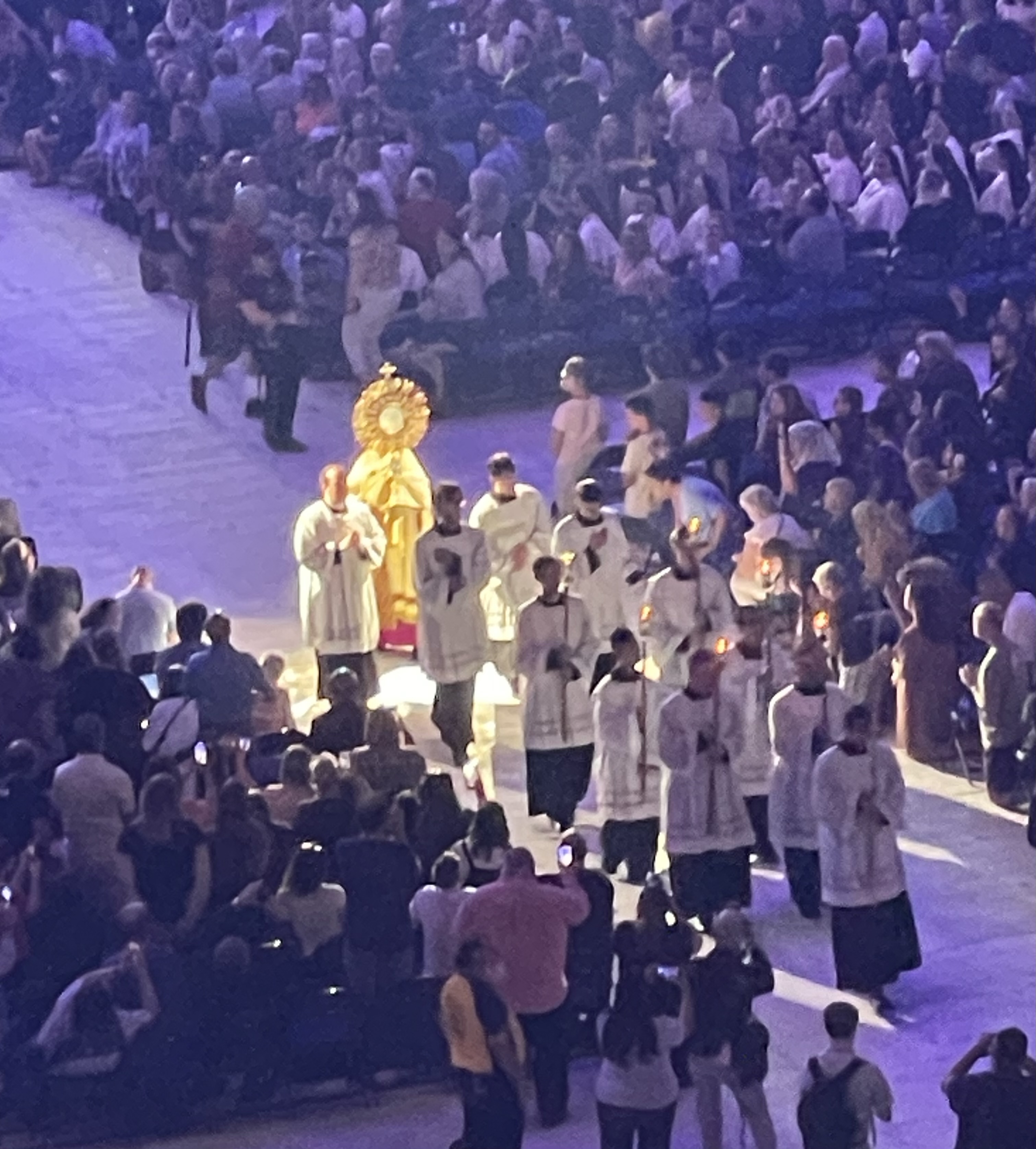
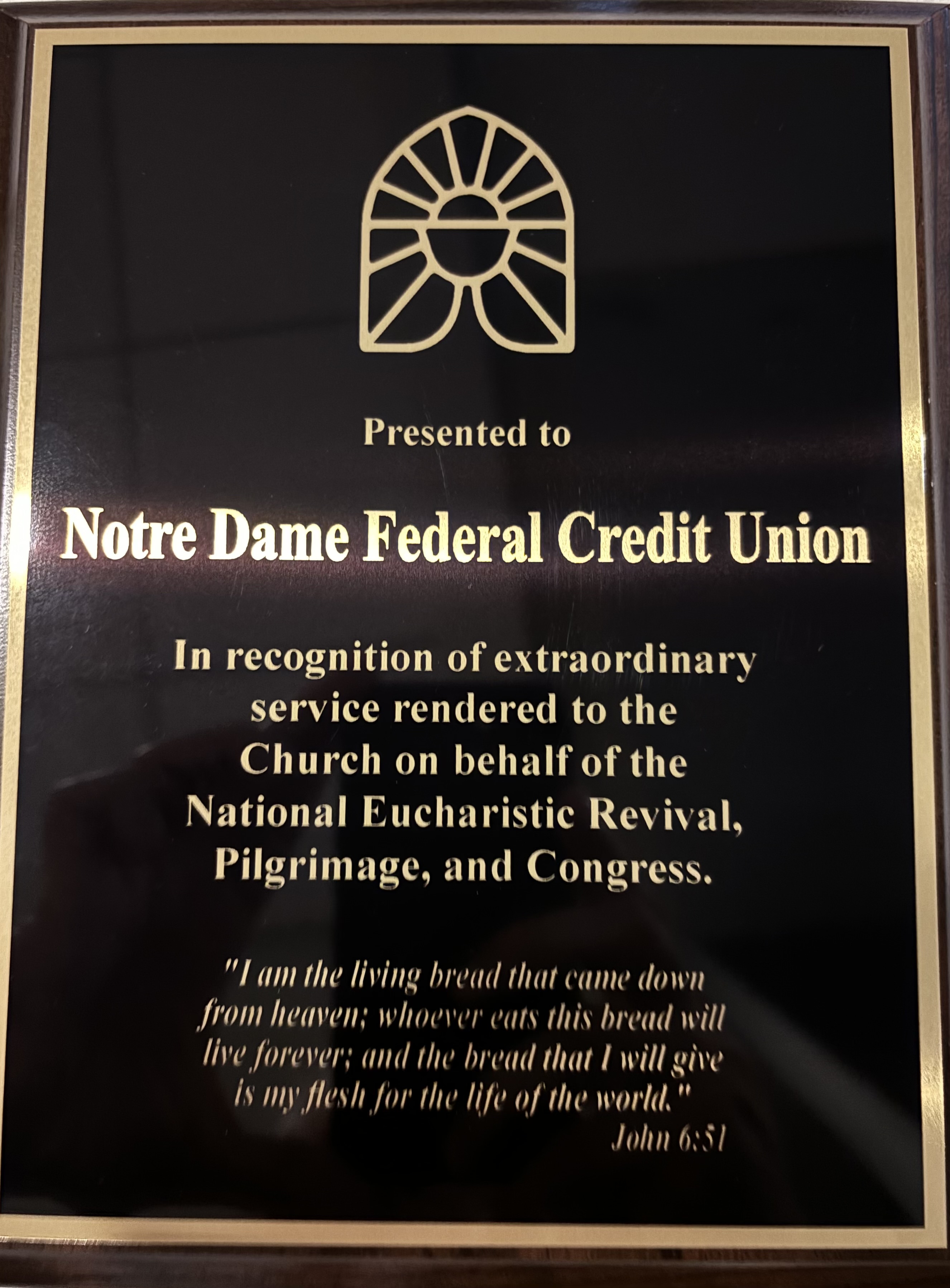
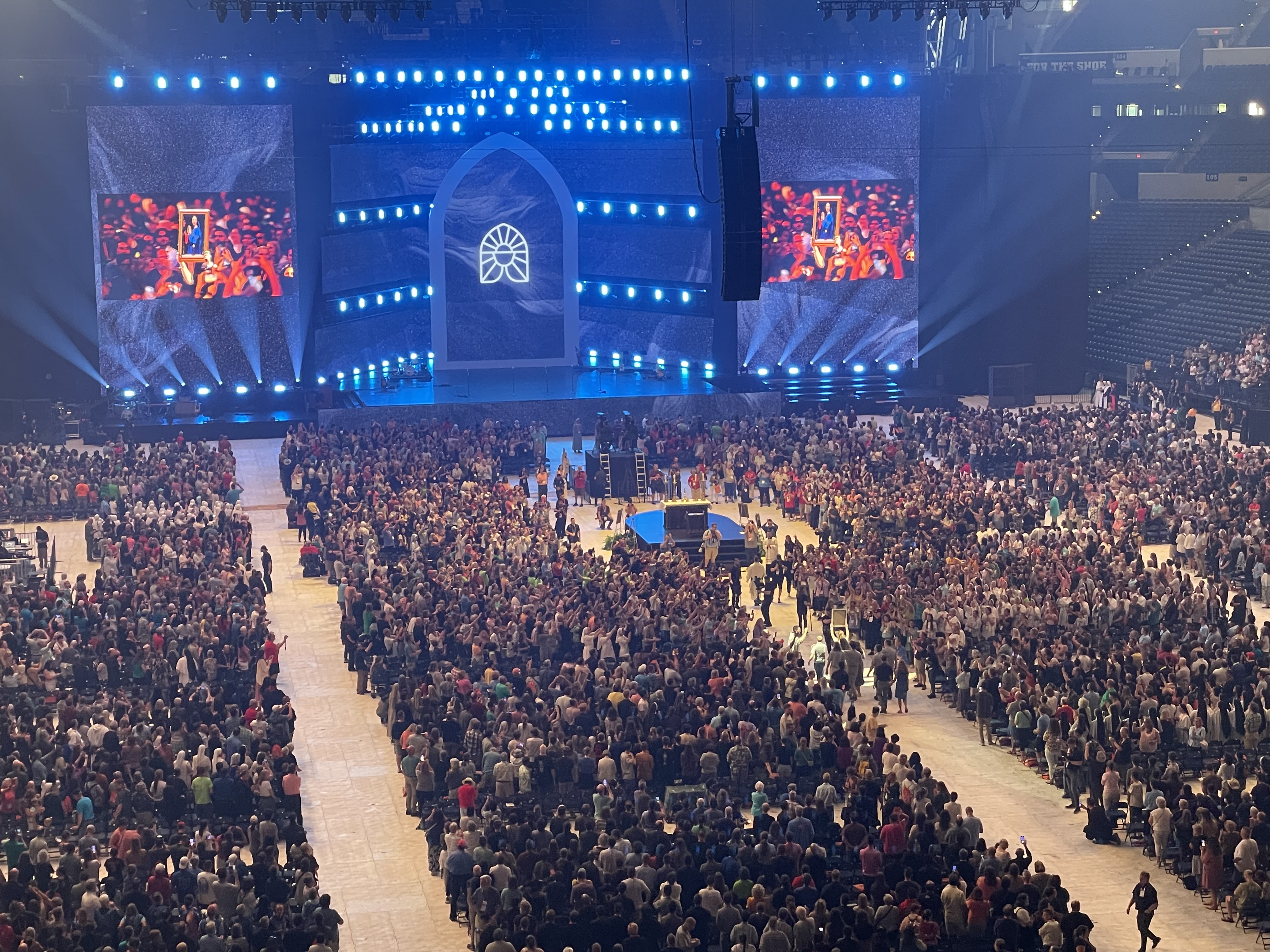
Held in July of 2024, the event itself was a tremendous success. The vibe was incredible. Estimates put attendance at roughly 60,000 people. At the conclusion, Notre Dame Federal Credit Union was even given an award in gratitude for the credit union’s essential role in helping the effort get off the ground. I rode a high for several months, but like all things, the buzz died down after a while.
Then, last summer, I received an email from David letting me know that Archbishop Thompson of Indianapolis had succeeded Bishop Cozzens as his boss and that he would be leading a pilgrimage to Rome for the Jubilee of Catechists at the end of September. He invited me to join the pilgrimage. Although it was at a highly inconvenient time, Margy and I accepted without hesitation. (I’ve now learned that when David Spesia asks me to do something, I’d better do it!)
Because Archbishop Thompson had succeeded Cardinal Tobin of Newark, New Jersey, as Archbishop of Indianapolis, he was in a position to ask Cardinal Tobin for a favor. So he asked him whether it might be possible for our group to receive a private audience with the Holy Father. The role of a Catholic cardinal is to be both an advisor to the pope and one of his electors. The pope knows all of the cardinals personally, and they enjoy a level of access that others simply do not. Since Pope Leo is an American, he is particularly familiar with the American cardinals. Of course, Cardinal Tobin agreed to help—and he made it happen for us.
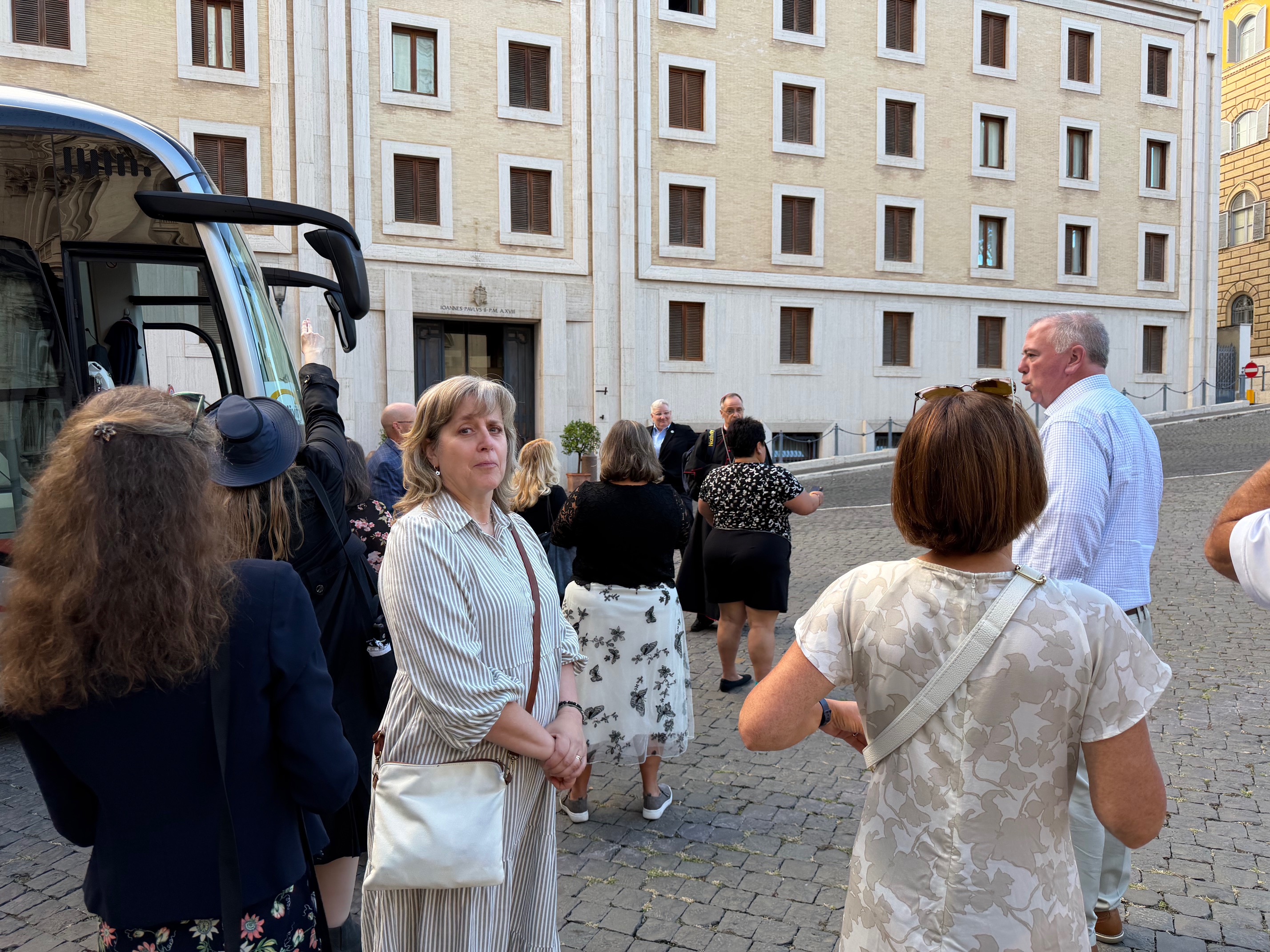
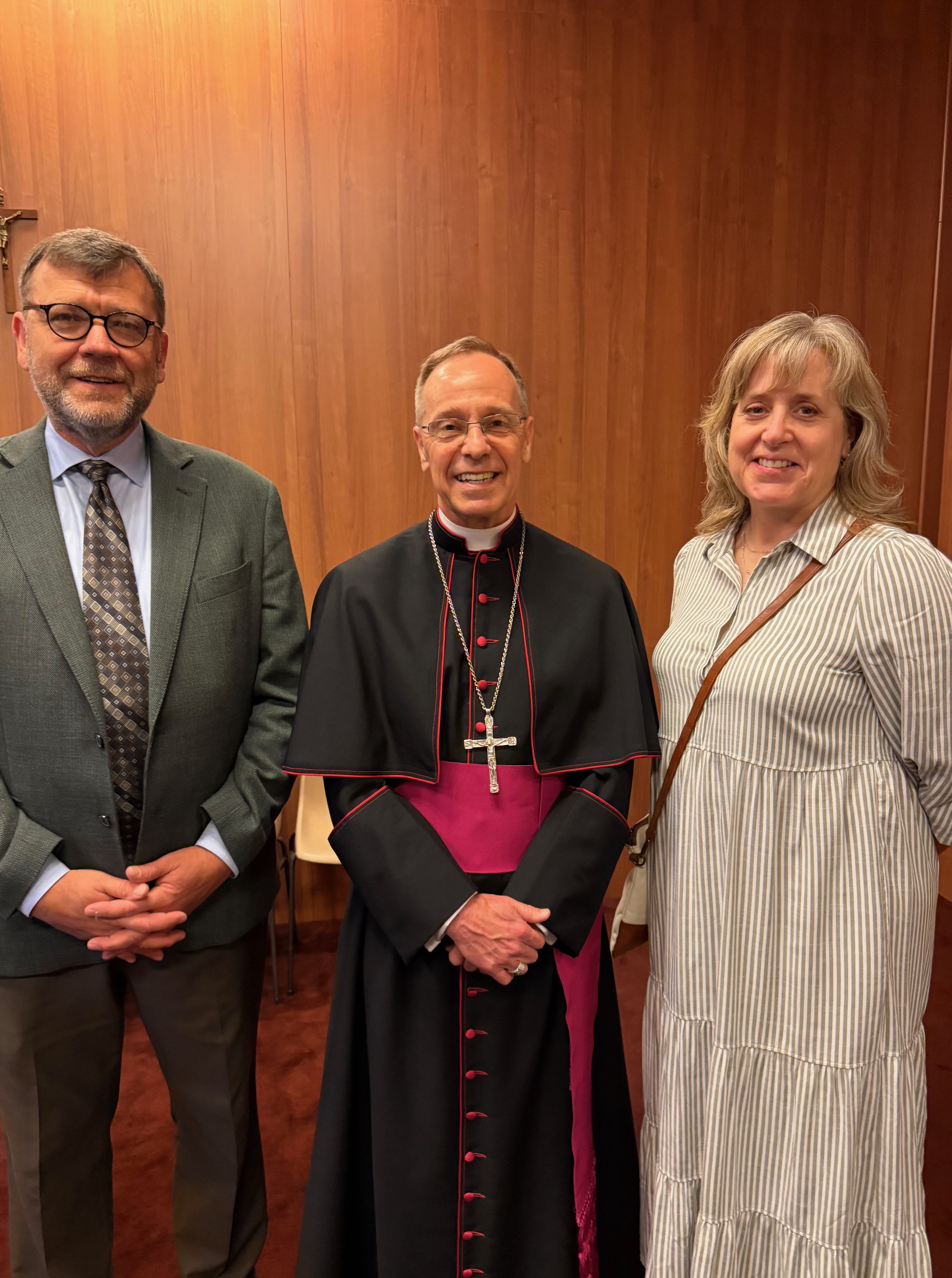
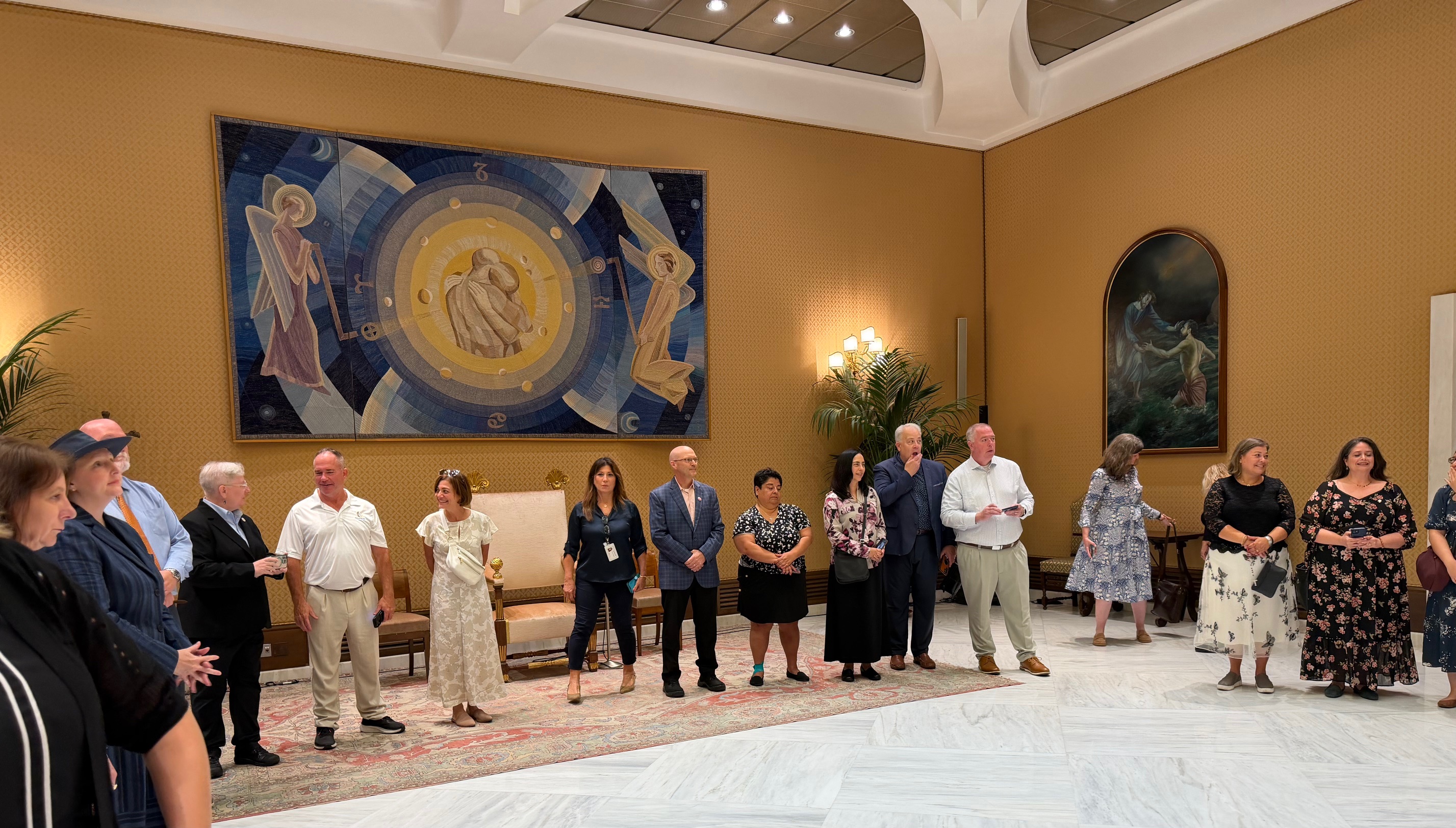
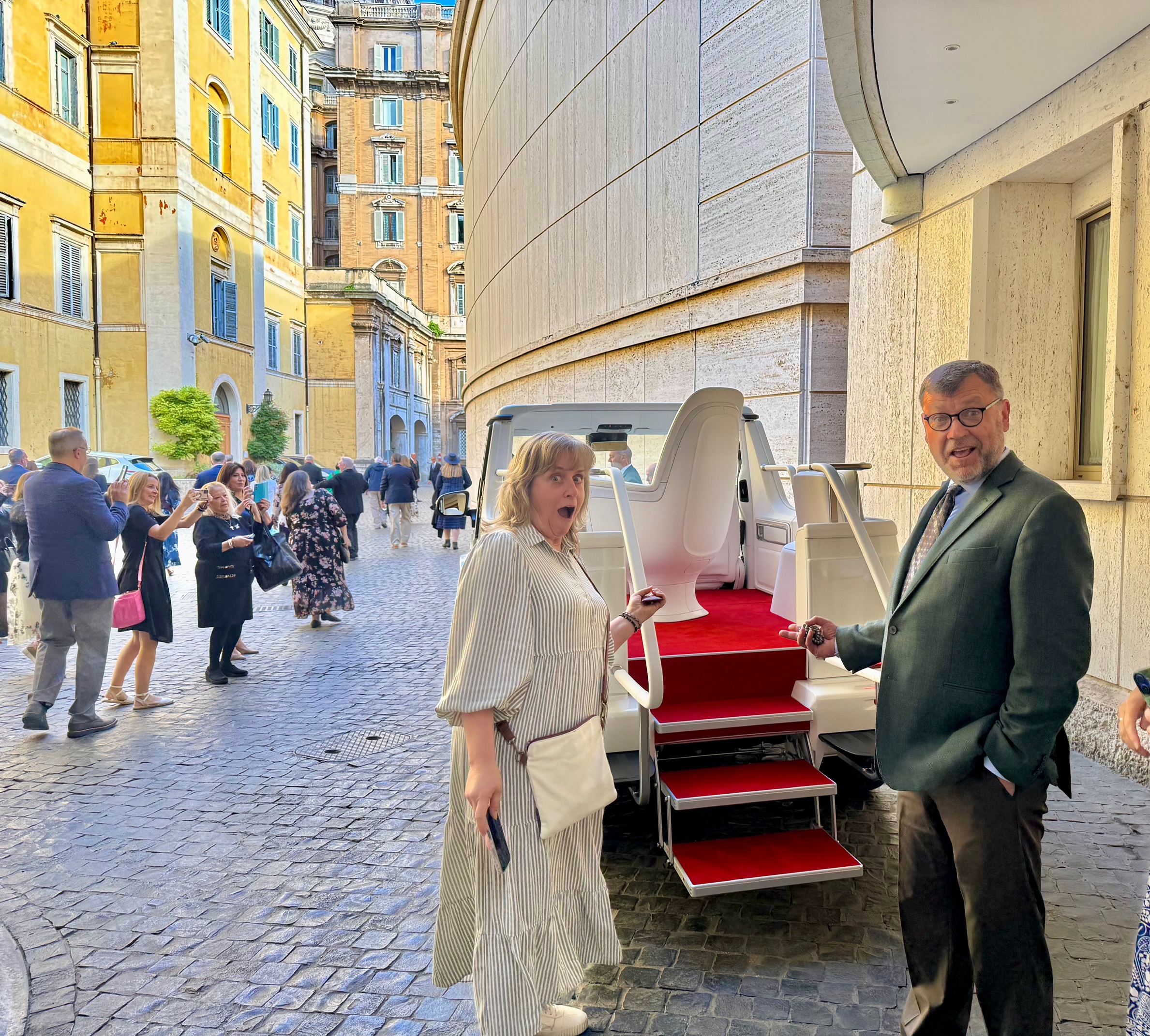
Our bus pulled through the back gate of the Vatican at 8:00 a.m. on a sunny, beautiful Saturday morning—September 27, 2025. After a brief wait, very well dressed security men greeted us and escorted us through the back doors into the Vatican offices. We spent a few minutes in a surprisingly shabby, outdated waiting room, decorated in what could only be described as cutting edge 1970s institutional style. Eventually, we were led into a much larger and more traditionally ornate room, where we were asked to form a semi-circle facing the door.
After a short wait, Pope Leo entered with Archbishop Thompson. They each greeted us with brief remarks. Archbishop Thompson said exactly what you would expect: “We are honored and grateful to have this time with you, Holy Father.” When it was the pope’s turn to speak, he reminded us that we are just as much a part of Christ’s Church as he is. While those who work in the Vatican may hold certain offices and authority, we are all members of the Body of Christ. Because of that, he said, we all share responsibility for building up the Church through our good works and through evangelization and catechesis. It was a clear exhortation to us: keep praying, and keep working!
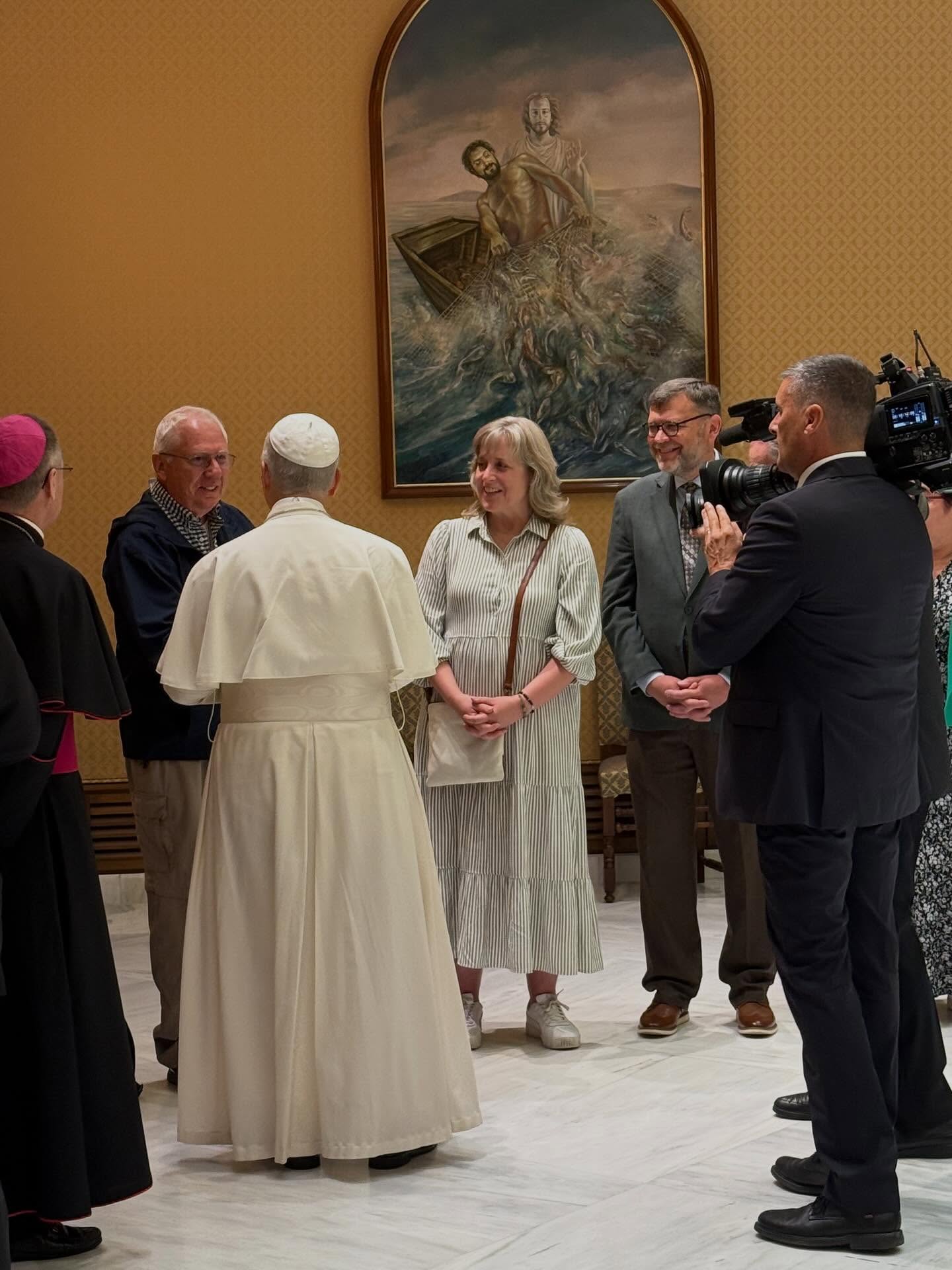
After that, the Holy Father began making his way slowly around the room, personally greeting each person. Margy and I had about two—maybe two and a half—minutes with him. Margy’s conversation was briefly interrupted by laughter and banter with the gentleman standing next to her, who had asked the pope whether it was really true that he plays Wordle every day. It is. The pope laughed and confirmed it, saying that his brothers claim it is not fair because they don’t have the advantage of “divine inspiration!”
When the Holy Father greeted me, we spoke about his recent request—issued a week or two earlier—that Catholics around the world pray the Rosary for peace throughout the month of October. As a devoted Rosary-prayer myself, it was an easy and natural conversation. Before he moved on, I told him that in prayer I had been given a simple but steady conviction: “Everything will be alright.” I believe he appreciated the encouragement.
Further down the line was a beautiful couple, Michael and Teri, from New York City, who had both just retired after nearly forty years teaching in New York Catholic schools. Michael said playfully, “Holy Father, I hope you don’t mind that I root against Villanova all the time! I went to St. John’s! Go Red Storm!” Pope Leo, a Villanova graduate, seemed prepared for this sort of thing. He laughed and replied, “Don’t worry—Fr. Bob Prevost was a huge Villanova fan, but Pope Leo is a fan of all teams!”
It was funny, but it also struck me as profound. When a man becomes the Vicar of Christ on earth, the office becomes his new identity. The head of the Catholic Church should never be partisan in such a petty matter. He is responsible for the encouraging the salvation of every soul. Rooting against a particular team might cloud someone’s ability to hear his important spiritual messages. Think about it—would you want your pope rooting against your team?
When he had finished greeting every person, Pope Leo gathered us closely around him, almost like a football huddle. As we stood there in silence, the Successor of St. Peter began a beautiful spontaneous prayer that ended with him leading us in an “Our Father.” It was a moment of extraordinary grace, one I will never forget.
Before he left, he stopped and turned to look at everyone:
“Work for unity, not division. Build bridges, not walls.”
And with that, he left us.
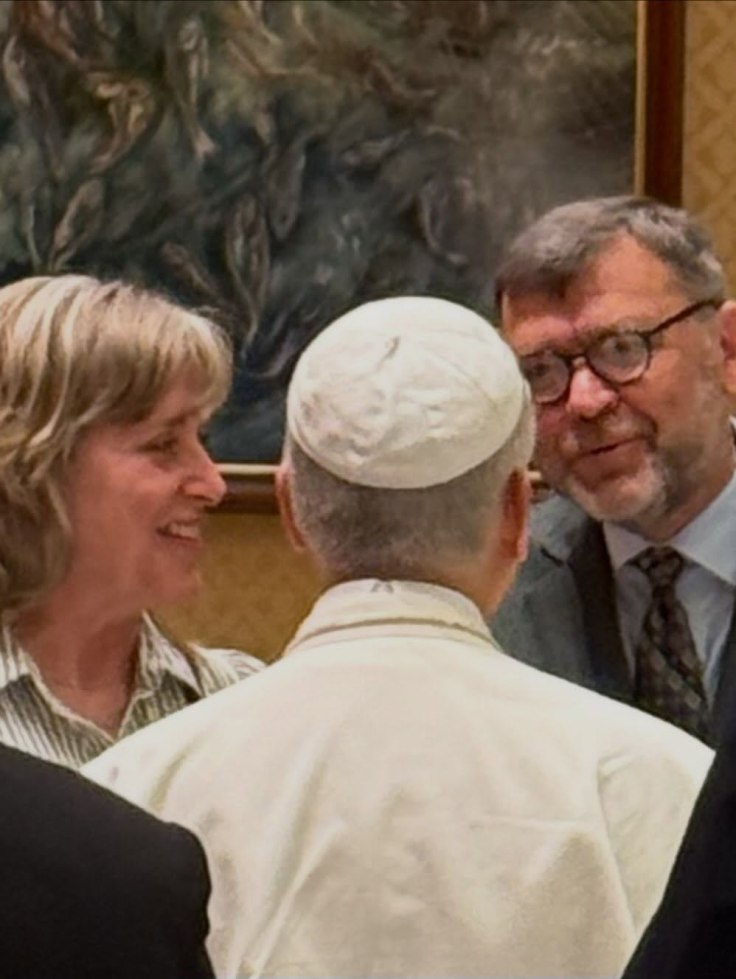
This all probably sounds very simple and straightforward, but somehow his message landed. It gave me personally a great deal to think about. Popes can be great, terrible or anything in between. St. Peter himself was a flawed but earnest man. Regardless of how history judges Pope Leo, it appears to me that is he is humble and prayerful and sincere. That’s a great start! Catholics believe that there can also be a “grace of the office,” meaning that simply by his position, it is possible for God to work through him and transcend some of his personal limitations.
Whatever the case, Pope Leo’s words struck me in a profound way. They seemed to affirm my mission in life: to love people, to care about the health of their souls, and to welcome others into relationships that build bridges of friendship and unity.
I thought first about my lifelong work to promote belief in the Holy Eucharist. The Eucharist is Jesus, so this is like building a bridge to Jesus!
Then my thoughts also turned to my own small ministry currently unfolding in our backyard pub. In doing so, it felt as though the Holy Spirit—through the words of the Holy Father himself—had affirmed the good work happening there. It is like building a bridge to others!
Partially based on this validation, in 2026, I am determined to make our pub’s bridge-building ministry move forward so that it can bear even more fruit. And of course, I will never stop promoting the importance and beauty of Jesus in the Eucharist.
Thank you, Holy Father! I am deeply grateful for your encouragement.
(If you have any reactions or questions, I would be happy to respond them in the comments.)


 Thoughts from the Side of the House...
December 31, 2025 at 3:43 pm
Bobby, I cannot tell you how deeply your sharing/teachings especially this one have been laid on my heart. It has been many years since we have seen each other but I have always considered you and Margy friends. I pray for you and your family often and thank Our Blessed Mother for intersecting our lives at SMG so long ago. We don’t often know how our lives affect others but sometimes we are given a glance. Back then my husband and I had been separated for years and I really had accepted that this was my path. Through God’s grace about 10 years ago we reconciled and will live out our remaining years together. I had often shared some of your thoughts with Dennis and your journey. Recently one morning he woke up and told me he had been awakened and told to pray for you (honestly I didn’t know if he was really listening when I’d shared with him). I was in shock because I had just read your deeply personal sharing about your health challenges and how they’ve driven your faith. You have allowed God to use you and He has touched so very many people through your suffering. Dennis and I then talked about all this and how he was called to be a part of your journey. I thought you might want to have a glimpse at two lives you have touched and continue to impact.
I will forever be grateful for those precious years at SMG and how through our love of Mother Mary and our God He continues to use us and with His grace maybe touch just one life. All the years at the preschool it was my fervent prayer that through the Atrium and those little souls we could somehow change the course of our very broken world. You give me hope.
In Christ’s peace I send you both my love and a hug. Know that you can count on these two people’s prayers.
I know my sharing is a lot bigger discussion and who knows maybe one day…. On the side of the house or in your mission pub?
❤️Kathleen Bies
LikeLiked by 1 person
December 31, 2025 at 2:22 pm
It would appear to be that your “Pub ministry” is uniquely qualified to “build bridges” and create unity. After all, food and drink are often the centerpieces for conversation, whether it is family meal or a business lunch. And it is only through conversation of people of goodwill (which are the people invited to the pub, or the side of the house) that understanding can be reached. Because until we can understand one another, our voices clamor like a “Tower of Babel” and no one understands anyone. But where two or more are gathered, there He is…and isn’t He the ultimate bridge to the ultimate destination we’d all like to reach.
LikeLiked by 1 person